Showing posts with label David Denby. Show all posts

04 July 2014

Dialing it down: Readers respond to James Wolcott on Adam Gopnik

Not all, it seems, were happy to be implicated in the gang-thrashing of Adam Gopnik. There have been murmurs of demurral among some of The New Yorker faithful.

"You have made a powerful enemy today."

Emdashes makes clear that her linking to Wolcott's screed was not a tacit seconding of his opinions, although she "reveres Wolcott as a critic and likes him tremendously as a person"—something akin to what Gopnik himself must now be feeling. (She gives her final word on the matter here.)

Kia from Gall and Gumption voices unease at the attention Wolcott's linking to her has brought. Sure, she's got reservations about Gopnik's writing, but she takes pains to separate the words from the man, a distinction Wolcott giddily ignored.

But, so far, NY-based Canadian freelancer Jeff MacIntyre has had the sharpest, truest response:
"I've always found Gopnik precious, but he's got a great many talents that make him seem more a peacock for their unfashionable and rare status, such as the breadth and promiscuity of his interests.

The piece was ridiculously narrowminded, as much fun as it is to read Wolcott on a tear, particularly because Gopnik does not really espouse some unified theory of smug disregard for his reader or peers. With him I get a very real sense he's being himself, which is no big whoop nor any crime. I think for a writer to come in for that kind of hating, he has to be offending on some higher level than that."
Read: Wolcott's 2007 screed,
and my initial response
to the "curbing"
So who is James Wolcott? "The King James Version," a New York Magazine piece from 2001, sketches in some background on our assailant célèbre. The piece begins:
"James Wolcott knows about envy. He's spent the past seventeen years holding two of the most sought-after writing gigs in America: Vanity Fair, of course, but also a four-and-a-half-year stint at Tina Brown's New Yorker. His salary is one of the highest in the business (as high as $400,000, according to Inside.com). And everyone pretty much agrees that he's got the most powerful pen in popular culture
It doesn't help matters, at least in the enmity-and-envy department, that Wolcott uses his pulpit—Vanity Fair as well as lengthy pieces in The New Republic and The London Review of Books—to deliver mordant, personal attacks. His columns aren't just critical reviews or clever commentary, they're laced with humiliating zingers.

Media heavies are favorite prey, but, for some reason, he's hardest on fellow writers. Gloria Steinem has "the nun-glow of a strict forehead"; Martin Amis was "the scowl of a new generation" who made writing look "insolently easy"; David Denby is "the boy who cried wolf. Easily excitable and always concerned." Jay McInerney and Bret Easton Ellis write a "ticker tape of dropped names." On Richard Ford's taste for hunting: "Well, now we know who killed Bambi's mother. It was Richard Ford on one of his death strolls."
I may be missing the subtext of the put-downs, but none seems particularly glittering to me. I'll try one of my own: Wolcott is a "cheese-tray-hovering mouthbreather" whose "sublimated schoolgirl pique" has made his writing "a bile-ejaculation derby." Unremarkable, as I'm sure you agree. The hole of the Internet is deep, and, thankfully, such sentiments have weight. For insults, I like Roald Dahl.

More interesting than insults is what David Denby and Tina Brown have to say about James Wolcott. (Denby is one of the magazine's film critics; Brown was the editor from 1992 to 1998—a tenure during which, according to Salon, she was "either her generation's most adroit zeitgeist surfer or the lead zombie in a highbrow remake of "The Texas Chainsaw Massacre.")

David Denby
"I don't think there's anyone smarter than Jim reviewing for the last twenty years. He can see the contradiction in things in a way that can be quite breathtaking."

"I admire him, he's a phenomenal autodidact. He's learned from literature and journalism directly rather than from professors, which left him without any sense of false piety—and he developed a very vigorous style that turns the surface of things into metaphor. He can describe a performance or a personality and gather it up into a superb visual caricature.

But there's a problem with that: he stays on the surface. He doesn't seem to me to make the next step. There is no cultural value to defend. The only terrible thing for him is to be boring. That's a pop aesthetic. He's got nothing to fall back on."
Tina Brown
"I think he felt jostled at the New Yorker. He felt outclassed by Anthony Lane, Adam Gopnik, and David Remnick. At Vanity Fair, there's no one else to muscle in on his territory."
Ah, the male anxiety and territoriality... They're the reasons (along with, of course, sexual frustration) Camille Paglia says there's never been a great female lead guitarist in a rock band. Unfortunately, some of us take up writing.

Anyway, I've got to catch up on Wolcott. I know he's bodyslammed Gopnik and Denby, and now, tantalizingly, I've learned he's taken on Christopher Hitchens, too. Has he tried Lane, Remnick, or anyone else now at the magazine?

Has Wolcott ever got his?

(Extra: Elizabeth Kolbert on Tina Brown, circa 1993: "How Tina Brown Moves Magazines.")

15 March 2014

Platform agnosticism


A new piece of nomenclature that—like "backstory," perhaps—will rise from obscurity to common use in two weeks flat: "platform agnostic."

I first saw the term in David Denby's January 8th article on the future of Hollywood films. He uses it to refer to the viewing habits of kids, who will "look at movies on any screen at all, large or small."

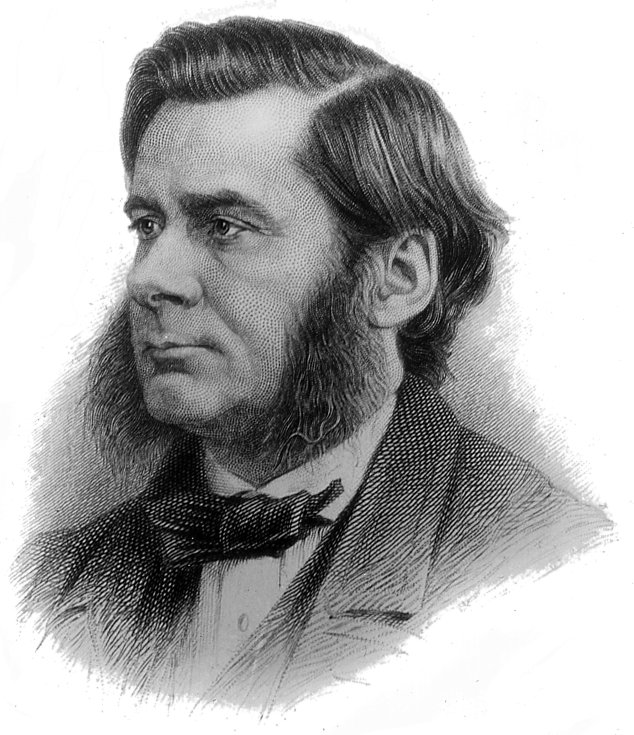
(Photo: Thomas Huxley [1825-95], a great defender of Darwin, who coined the term 'agnostic' to describe his belief that it cannot be known whether or not god exists. The word comes from the Greek—'a' [not] 'gnosis' [knowledge].)

Denby, like most cinephiles (and old people), is not a platform agnostic. He doesn't like how the iPod rides up and down on his stomach when he's watching a movie. And holding it away from his body makes his arm tired. And his eyes hurt to focus. Besides, he's got better options.
"At the house of my friend Harry Pearson, I watched movies on what must be close to the ultimate home-theatre system, a setup priced at two hundred thousand dollars."
So, Mr. Denby, when I start my internship, I'm going to be polite at first. I'll swing by your office and be, like, yeah, no frigging way can we dispense with the Western canon. Nothing about Anthony Lane being funnier. But then...I'm going to get a little more insistent.

Let me put it out there right now: I'll watch whatever you guys are watching. I'll be really quiet. And I will bring the Stroh's.

Talk of platform agnosticism at journalism school is appropriate: the newspaper god is ailing, and journalists have begun to hedge their bets. We take something called Multiplatform Journalism (the 'multi' means print, audio, video, and online), which will help me a tonne when I give up on slackjawed Joe Public and go into advertising.

Dorky Times publisher Arthur Sulzberger, Jr., who carries a stuffed toy moose around, also describes himself as a platform agnostic.

Still working on the link between the two.


Originally published on Jan 22, 2007

07 July 2007

Dept. of As It Is Lived

Woke this morning and rolled over to read the last two columns of a David Denby film review. It's my fifth morning in my tiny new apartment.

My curtains are drawn, but the windows are open, and on Nelson Street I can hear the cars and fire trucks, of course, but also bicycles and four kinds of birdsong—a squall, a hoot, a gurgle, and a pinched whistle—and pedestrians and their low conversations, footfalls, and pockets jangling with change.

The Denby review, of a film called "Evening," had a beautiful line, and I very much like the idea behind it:
"The two women look at the past, compare marriages, and make an accounting of their mistakes—which turn out to be merely life as it is lived, not as is hoped for."
I'm going out for a coffee, as it is drunk and not hoped for. That means a choice between the 7-Eleven and the better, pricier cafe, with something existential hanging in the balance. You want anything?

02 May 2007

Go tell it on the mountain

Not sure why I chose that title: the song brings to mind my sister's squinted-up face at a Christmas party somewhere in East Vancouver, singing because the adults asked her to. It just came to me.

Good news: I've shifted the pile of schoolbooks on my floor—the ones I had to triple-jump through to get to bed. Twenty-one of them have to go back to the UBC library by June 15, and I can only find 18. The cleanup has excavated several magazines, most of them New Yorkers, all bent open to random pages.

Apparently, I dropped:
  • a Walrus in the middle of an article about an overcoat made of aluminum window screening;
  • a New Yorker in the middle of Denby's review of "The Wind That Shakes the Barley," a film I'd never heard of;
  • a New Yorker at the outset of one of those high-spirited Patricia Marx pieces ("Emotional Baggage") in which she prices everything;
  • and a New Yorker just at the end of that profile of Gordon Ramsay, the English chef who's sublimated his raised-on-a-council-estate class fury into truffle and morel preparations. (This one I remember; it's taken me three pre-sleep reads to this point.) What the hell is a morel?
I did read Adam Gopnik's gun-control screed this week, and, fan though I am, I did a thick swallow after his last line—something about how oh, the cell phones of the dead Virginia Tech students are ringing still. Brrr.

Also, Malcolm Gladwell on The Colbert Report: I wanted to listen to one man or the other, not both. Malcolm was a touch earnest, and Stephen kept cutting him off with ersatz jokes like "What, you need a degree for that? A piece of paper?" although he did get in a good bit about honorary degrees. I give it a six point seven.

12 April 2007

On Tarantino

I think the issue I lost contained a review of "Grindhouse"—that new double feature by Quentin Tarantino and the other guy.

I'm working hard on an article about funeral music (by the way, you can still vote for your song), but I'm going to go and seek the review out later, and treat it like a sorbet for my brain. In my heart, I hope it's by Denby, and that he does Tarantino a little ultraviolence, but I'm willing to accept another result.

Having seen the TV commercials for "Grindhouse," though, I'm bracing for another queasily masturbatory homage to a 1970s schlock-action genre. I've never resented a director so much as I did Tarantino, after watching "Kill Bill I."

Anyone disagree with Denby that "Kill Bill" was "what’s formally known as decadence and commonly known as crap"? Taipei Davey?

(JJB Photo: "9 Alma.")